What is Companion Planting?
Companion planting is a gardening technique where certain fruits, vegetables, herbs, and flowering plants are grown in close proximity to each other to enhance crop health, productivity, and boost pest control. Gardeners have been using these techniques for generations, with some pairings documented for hundreds or even thousands of years. For example, some famous companion pairings include:
- The Three Sisters: Corn, Squash, and Beans
- Tomatoes and Basil
- Carrots and Onions
The Benefits of Companion Planting
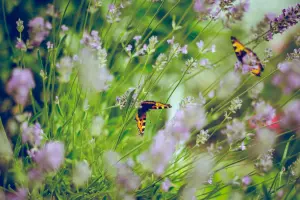
Attracting Pollinators: Plants with flowers that offer a rich source of nectar and pollen help draw various pollinating insects such as native bees, honeybees, butterflies, moths, flies, and beetles, as well as hummingbirds. From early blooming trees, shrubs, and bulbs, to long-blooming perennials and annuals, there’s a wide variety of plants that both attract and support pollinators and other beneficial insects in your garden.
Deterring Pests: Plants with strong fragrances, such as Catmint, Lavender, or Russian Sage, produce chemicals and oils that repel certain, often harmful insects, while they attract beneficial insects at the same time. Certain plants also are more attractive to pests, enticing them away from your crops.
Attracting Beneficial Insects: In addition to attracting pollinators, many plants also attract insects that prey on the harmful insects that eat your crops. These “beneficials” include ladybugs, lacewings, hoverflies, parasitic wasps, and other insects that can help reduce pest populations in your landscape without having to reach for chemical products.
Best Annual Flowers for Companion Planting
Borage (Borago officinalis)
Also known as Starflower, this Mediterranean native plant produces tall stems with blue, start-shaped flowers from Summer to Frost. These flowers are edible, with a fresh cucumber flavor, but are useful in the garden as pest deterrents, slug/snail traps, beneficial insect attractors, and pollinator magnets.. It also grows a deep taproot that brings trace minerals from deep in the soil up and aerates compacted soils.
Calendula (Calendula officinalis)
Also known as Pot Marigold, Calendula is an annual flowering plant that has been used for culinary and medicinal purposes for centuries. Its aromatic foliage repels asparagus beetles, tomato hornworms, and mosquitoes. Calendula flowers are edible and attract bees, butterflies, and other pollinators. Through annuals, Calendula may reseed, giving you more plants the following year.
Marigold (Tagetes spp.)
Perhaps the most well-known companion plant for the vegetable garden, Marigolds have a long history of edible, medicinal, and ceremonial use in their native ranges in Central and South America. These flowering plants repel a large number of garden pests, including aphids, cabbage maggot, corn earworm, cucumber beetle, flea beetle, squash bugs, mosquitoes, and nematodes. They also attract ladybugs, lacewings, and hoverflies, beneficial insects which feed on pests.
Nasturtium (Tropaeolum majus)
A trailing plant that’s grown for its edible leaves and flowers, Nasturtiums are a vegetable garden must have. These plants deter a large number of pests, and are effective trap plants, drawing pests like aphids away from your vegetable crops with a more appealing snack. Their profuse, bright yellow, orange, and red funnel-shaped flowers also attract bees, butterflies, and hummingbirds.
Sunflower (Helianthus spp.)
The common Sunflower (Helianthus annuus) is known for its stately presence in the garden and its iconic, large, yellow flowers. In addition to attracting pollinators and beneficial insects with their flowers, a sunflower’s seeds are a beacon for birds, who also help reduce pest populations, especially grasshoppers. Sunflowers also are useful as trap crops for aphids, who are herded onto their stalks by ants, taking them away from your more valuable vegetables.
Sweet Alyssum (Lobularia maritima)
Alyssum, or Sweet Alyssum, is a low-growing plant with clusters of small, sweetly fragrant flowers, primarily grown as a bedding groundcover or container plant. Its sweet, nectar-rich flowers also attract pollinators and a variety of beneficial insects, including hoverflies, parasitic wasps, ladybugs, and lacewings that feed on common garden pests like aphids and thrips. As a groundcover, Alyssum can also help suppress weeds around your crops.
Herbs as Companion Plants
In addition to their culinary and medicinal applications, many herbs also perform double duty as plant protectors. The same compounds that give plants like basil, oregano, lemongrass, and others their strong scents and flavors act as repellants for harmful insects, deterring them from vegetable crops they are planted close to. Some even help keep pesky flies and mosquitoes away. Here are some herbs that help keep pests away:
- Basil
- Chives
- Cilantro
- Dill
- Lemon Balm
- Lemon Verbena
- Lemongrass
- Marjoram
- Parsley
- Oregano
- Mint
- Rosemary
- Sage
- Savory
- Tarragon
- Thyme
Best Perennials for Companion Planting
Allium (Allium spp.)
Many plants in the genus Allium, including Garlic, Onions, Leeks, and Chives, are cultivated as edible crops in the backyard garden. Ornamental varieties exude similar pungent odors that deter pests such as aphids, cabbage worms, mosquitoes, and slugs above ground, and grubs, nematodes and other root-damaging insects in the soil. They also provide beautiful purple blooms Spring through Summer, providing a reliable nectar source for many bee and butterfly species.
Agastache (Agastache spp.)
Agastache, also known by the common names Hummingbird Mint and Anise Hyssop, is a genus in the Mint family mostly native to North America. These herbaceous plants bloom profusely from Spring through Fall, with a wide variety of colorful cultivars available.Their tubular flowers are magnets for hummingbirds, and attract bees and butterflies as well. Strong, licorice-scented foliage repels cabbage looper and cabbage worm, too.
Bee Balm (Monarda spp. & Monardella spp.)
Bee Balms (Monarda spp.) are flowering perennials in the Mint family (Lamiaceae) with colorful clusters of tubular flowers atop tall stems. Strongly oregano-scented foliage deters mosquitoes, and can also be used as an herb garnish. Bee Balm flowers, as well as those of related Coyote Mints (Monardella odoratissima) and Hummingbird Trumpet Mint (Monardella macrantha) attract all kinds of pollinators, from native and honey bees to butterflies and hummingbirds. They also make great companion plants for tomatoes, improving fruit growth and flavor.
Lavender (Lavandula angustafolia, Lavandin)
With highly aromatic foliage and long-lasting flowers, this garden classic is an incredibly effective pest control method and pollinator attractor. Lavender foliage contains a high amount of linalool oil, which deters mosquitoes, flies, moths, ticks and fruit flies, as well as deer when planted as a barrier around landscape plants. Pollinators love the flowers as much as we do.