Utah’s water situation is changing. Mountain snowpack has dropped roughly 16% since 1979, and that trend isn’t slowing down.
For gardeners along the Wasatch Front, this means rethinking how we spend our water.
The goal of this article is to better prepare gardeners during times of drought.
If you’d like to get a more detailed explanation, this video from the Glover Nursery team breaks down where our water comes from and how water quality affects your soil.
It also covers practical steps to stretch every drop through a dry summer.
Where Does Our Water Come From?
About 60% of the Salt Lake area’s drinking water comes from Big and Little Cottonwood Canyons.
This water is called culinary water. It’s treated, clean, and used for drinking, cooking, and indoor plumbing. Only about 25% of the region’s total water goes to residential homes. Of that, roughly 60% gets used outdoors on landscapes.
Secondary water comes from reservoirs and lakes and is untreated. It often carries higher levels of salt, algae, fertilizer runoff, and other contaminants. If you’re on secondary water, it matters for your plants and your soil in ways we’ll get into below.
Culinary Water vs. Secondary Water
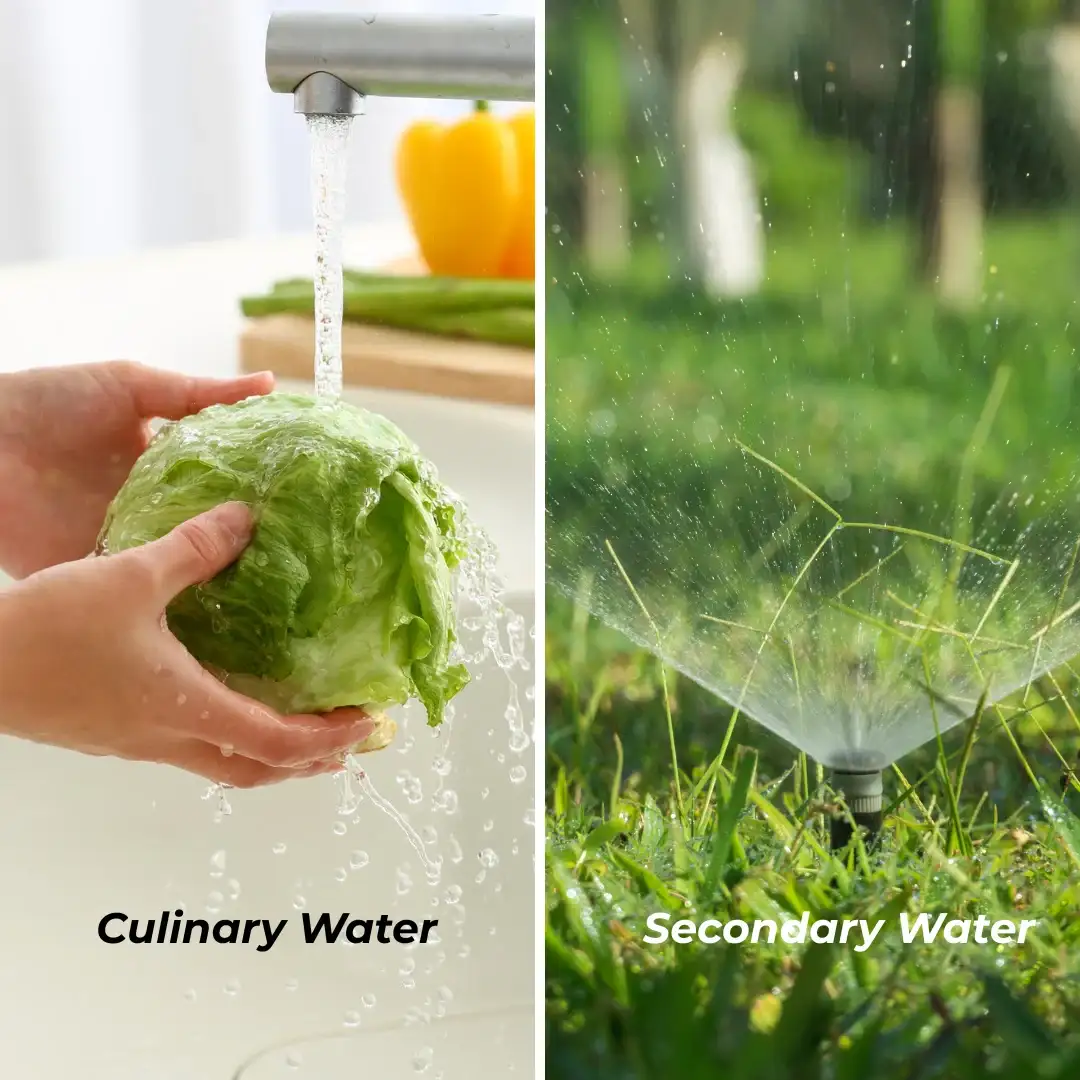 Culinary water is low in salts and safe for all plants. Secondary water isn’t. The higher salt content in secondary water can actually pull moisture out of plant roots through osmosis.
Your plants may look like they’re drought-stressed even though you’re watering regularly. The first thought you may have is a lack of water, but that’s the salt doing the damage.
Every time you irrigate with secondary water, salts accumulate in your soil. Over time, this buildup can stunt growth, scorch leaves, and weaken root systems.
The fix is leaching: applying culinary water deeply so that salts dissolve and get pushed below the root zone. But how often should you leach? It depends on what you’re watering.
If it’s turf, it needs about once a month during the summer months. If it’s trees and shrubs, it’s around twice a month. This also doubles as a deep soak, so you’re watering and leaching at the same time.
Soil type also affects how you leach. Sandy soils drain fast and release salts quickly, so shorter applications work. Clay soils hold water and salts longer. You’ll need to apply water slowly and for a longer period to push salts through clay without causing runoff or pooling.
How Plants Use Water
Tiny pores on leaf surfaces called stomata open and close to control water loss. When water vapor exits these pores, it creates a pulling force that draws water up from the roots. It works like a straw. When conditions get too hot, too dry, or too wet, these pores close down, and the whole system slows.
This is why both overwatering and underwatering cause similar symptoms. When roots sit in standing water, they lose access to oxygen and stop taking up water properly. The plant wilts even though the soil is soaked. On the other hand, drought-stressed roots can’t pull enough water to keep leaves healthy.
If your plants look wilted, check the soil before reaching for the hose. Dig down 2-3 inches near the root zone. If it’s wet, the problem likely isn’t a lack of water.
How Soil Type Changes Everything
Your soil texture determines how water moves, how long it stays available to roots, and how salts behave.
Clay soil has small, tightly packed particles. When water then moves through it slowly, salts get trapped. If you’re leaching clay soil, you need to apply water at a slow rate for a longer time so it can actually percolate downward. However, avoid flooding the surface; that just causes runoff and pooling.
Sandy soil, on the other hand, has large particles and big pore spaces. Water drains quickly, which means it dries out faster, and you may need to water more often. The upside is that salts leach more easily from sandy soil.
If water sits on the surface and refuses to drain at all, that’s a different problem. You may need to improve drainage through soil amendment or targeted solutions rather than just adjusting your watering.
Adding organic matter (compost, bark, shredded leaves) improves both soil types. It helps clay drain better and helps sand hold moisture longer. Mulching the surface with 3 to 4 inches of organic material also reduces evaporation, moderates soil temperature, and limits weed pressure.
How to Tell If You’re Overwatering or Underwatering
The symptoms overlap, which is what makes this tricky. Here’s how to tell them apart:
Signs of overwatering:
- Soft, swollen stems
- Yellowing leaves with the soil still wet
- Persistent soggy soil around the base of the plant
- Mushy or dark roots when you dig down
Signs of underwatering:
- Dry, brittle, or curling leaves
- Soil that’s dry and cracked at root depth
- Wilting that doesn’t recover in the evening
Signs of salt damage (from secondary water):
- White crust on the soil surface
- Leaf scorch or browning on edges
- Symptoms that look like drought, even though you’re watering
If roots are already suffocating from too much water, back off on irrigation and let the soil dry down. Severe root rot may not be reversible, but many plants can recover if you catch it early. For salt damage, leach with culinary water as described above.
Watering Strategies for Different Parts of Your Yard
- Trees and shrubs: Water deeply and less often. This encourages roots to grow downward, which lets them build long-term drought resilience. A slow, steady soak that wets the entire root zone is better than frequent short runs. If you’re using secondary water, these deep soaks double as leaching events when done with culinary water.
- Lawns: Water deeply but on a more regular schedule than trees. Reduce frequency in cooler months and increase during the hottest weeks. If your lawn is on secondary water, schedule at least one monthly leach with culinary water to prevent salt burn.
- Flower and vegetable beds: Wet the root zone thoroughly, but don’t waterlog since the roots need oxygen. Instead, try to adjust the duration based on your soil type. For reference, sandy beds will need shorter, more frequent watering while clay beds need slower, longer applications.
Across all areas, water in the early morning between 4 AM and 7 AM to help cut down on evaporation. Avoid watering in the middle of the day when water evaporation is at its highest.
What to Prioritize When Water Gets Tight
If water restrictions come or your supply dwindles, you’ll need to make decisions to reduce your water usage. Thankfully, not everything in your yard carries the same weight.
Start with your trees. They’re the most expensive and time-consuming elements to replace. Mature trees provide shade, structure, and property value. Losing a 15-year-old shade tree to drought is a much bigger setback than losing a patch of lawn. It also helps that trees reduce the amount of water you need thanks to their shade.
Next, focus on established shrubs and high-value perennials. Then the newly planted material still in its establishment phase. We also have a detailed watering guide for new plants, which you can check out.
Lastly, lawns. These are the most replaceable elements in most Utah yards and can often recover from dormancy once water returns.
We have a few handy tips that could help when you have a limited water supply:
|
Garden Products That Can Help Reduce Water Usage
Surfactants help water penetrate compacted or hydrophobic soils. If you notice water beading on the surface or running off instead of soaking in, a surfactant can help. It breaks that surface tension and gets moisture down to the roots.
 Humic acid and similar soil amendments improve structure and nutrient availability over time. Yes, they’re not a quick fix, but they still support healthier soil biology, which in turn helps plants use the water more efficiently.
Note: We carry all of these gardening essentials at the nursery. If you’re not sure what your soil needs, stop by, and our team can help you figure it out.
Watch the Full Video to Learn More
This blog covers the key points, but the full video goes deeper into the science and evenincludes visual examples to help you digest the information here better. Give it a watch if you want the complete breakdown!