Need a narrow tree for a tight side yard? A shade tree for the patio? A Japanese maple as a focal point? Glover Nursery has the selection and the staff to match you with the right tree. We only carry varieties suited to Northern Utah’s soils, water, and climate.
Ready to find your tree?
Stop by Glover Nursery at West Jordan or call us at (801) 562-5496 to check what’s currently in stock.
We are available Monday through Saturday, 8 am to 6 pm (March to October).
Visit Glover Nursery
Explore Recommended Trees
Call us to check inventory
Best Trees for Utah Landscapes: Available at Glover Nursery
Columnar Trees
Columnar trees grow tall and narrow, which makes them a practical choice for gardeners who would like to maximize their yard space.
They fit along property lines, beside walkways, and in side yards where a full-canopy tree wouldn’t work. You can plant them as standalone accents, group several together, or line them up to create a privacy screen between neighbors.
Most columnar varieties hold their upright shape with minimal pruning. They still give you seasonal color, fall foliage, and some shade without taking over the yard. If you’ve got a narrow planting strip or a spot that needs height without width, this is the category to look at.
We carry columnar forms of several deciduous species, including Beech, Hornbeam, Oak, Maple, and Gingko. Kindred Spirit Oak is one of our favorites for fence lines and narrow backyards. It holds a tight form, handles Utah conditions well, and has low water needs once established.
Skinny Genes Oak and Musashino Columnar Zelkova are also excellent options that have become quite popular choices for our community.
For Columnar Evergreen options, Blue Arrow Juniper, Taylor Juniper and Woodward Juniper are very popular options. For more information on popular columnar options, be sure to read this blog post.
Want to see what’s available? Submit an inquiry or visit us today.
Shade Trees Glover Nursery Recommends
Shade trees form the backbone of most Utah yards. A well-placed shade tree cools your yard, lowers the temperature around your home, and can cut energy costs during the hottest months.
The cooling effect of a tree’s canopy also slows water evaporation, keeping more moisture in the soil where it’s needed.
One of our most popular shade trees is the Princeton Elm. It’s fast-growing, disease-resistant, and handles Utah’s alkaline soils and secondary water without issue. The Accolade Elm is another strong performer with similar toughness and a graceful form.
Zelkovas are another reliable pick for homeowners who want something hardy and low-maintenance. We carry Green Vase, Village Green, and Wireless. All three are cold-hardy, handle challenging conditions well, and turn a dramatic orange-bronze once fall rolls in.
If you’re torn between an elm and a zelkova, both handle similar conditions. Elms do tend to grow faster and larger, while Zelkovas offer a slightly more refined shape.
A few other shade trees worth considering:
Maples – we recommend varieties that won’t scorch in Utah’s summer heat. Ruby Sunset, Pacific Sunset, and Norwegian Sunset all do well in our soils and hold up through the hottest months. As Ryan Glover puts it, you won’t see the brown leaf tips on these that you notice on other maples around the valley.
Ginkgo – exceptionally disease-resistant, long-lived, and turns brilliant yellow in fall.
Kentucky Coffeetree – handles drought and alkaline soils without complaint. Both are underused in Utah and deserve more attention.
A quick note on what to avoid: Silver, Red and Sugar Maples, Willows, Quaking Aspens, and invasive Russian Olive are all common here but have downsides. Weak wood, aggressive roots, disease problems, or invasive tendencies make them poor long-term choices for most yards. Quaking Aspens, while they are a Utah Native, tend to perform poorly in the lower parts of the valley, though they will do well if you’re higher up on the benches.
Shade trees are an investment, both of money and of time, as it takes about three years for root systems to fully establish. If you want it to reach that stage, you need to know how to plant it correctly. So we recommend taking a look at our tree planting guide before you start digging.
Flowering and Ornamental Trees Glover Nursery Recommends
If you’re looking for seasonal color, ornamental trees are the best way to do it. They tend to be smaller than shade trees, which makes them a good fit for front yards, garden beds, and accent spots. We have several gardener favorites in this category:
- Crabapples are among the most reliable flowering trees on the Wasatch Front. They tolerate alkaline soil, clay, heat, and drought once established. Some varieties even produce persistent fruit that hangs on through winter and feeds the birds.
- Redbuds bring the color most Northern Utah owners want in their yard. They start the year covered in bright pink flowers, then push out heart-shaped leaves in shades ranging from deep burgundy to bright lime. They don’t love compacted soil, so check your soils before planting.
- Magnolias surprise a lot of Utah gardeners. Many assume they’re a southern-only tree, but several varieties do very well here. If you want to see some established varieties, check out our display garden, where we have Galaxy, Edith Bogue, and Star Magnolias that have been doing beautifully for over 10 years.
- Smokebush is worth a look if you want something unique and very hardy. This small tree (or large shrub) puts on a display of wispy flower plumes in early summer that look like clouds of smoke. It comes in red, gold, and green-leaf varieties. It handles heat well and fits into smaller yards.
- Desert Willow is another strong pick for hot, dry spots. It blooms over a long season, needs very little water once established, and hummingbirds love it. It stays small enough to fit under power lines and works well in waterwise landscapes.
For guidance on keeping your ornamental trees and shrubs in shape, check out our pruning guide for flowering shrubs.
Japanese Maple Trees Glover Nursery Recommends
Japanese maples are one of those trees that people fall in love with at first sight. The foliage is colorful, finely-textured and dances with the slightest breeze.
Most varieties stay small, topping out around 6 to 10 feet, so they work well as accent pieces near the house or in garden beds. If you’d like to have this in your yard, we recommend browsing our guide for growing Japanese maples in Utah.
Laceleaf varieties form a dome shape with cascading branches. They do best with some afternoon shade and protection from wind. Upright varieties offer a broader canopy with bold fall color in reds, oranges, and golds.
They can be a bit more particular than other trees about site conditions. Our team can walk you through which varieties handle our climate best and where to position them in your yard. Visit the nursery today to see our incredible selection.
Fruit Trees Glover Nursery Recommends
Growing your own fruit in Northern Utah is easy to do. The key is choosing trees that can handle our cold winters, late spring frosts, and alkaline soils. We carry apple, cherry, peach, apricot, pear, plum, nectarine, and fig varieties selected for local conditions.
A few of our top picks:
Apple, Honeycrisp: The most requested apple tree we sell, and for good reason. The flavor straight off the tree is hard to beat. It’s cold-hardy, produces reliably along the Wasatch Front, and it’s the variety customers ask for by name more than any other.
Cherry, Montmorency: The standard tart cherry for Utah home orchards. Self-fruitful, so you only need one tree. Extremely cold-hardy and a heavy, consistent producer. Great for pies, preserves, and fresh eating.
Peach, Early Elberta (Gleason): Our pick for the best canning peach. It’s cold-hardy for a peach, less prone to fruit drop than standard Elberta, and the fruit quality is a step above. It was actually developed in Utah and has been a Wasatch Front staple for decades.
Note: Fruit trees do require regular maintenance, including pest management, pruning, and proper watering, more than other trees. Our fruit tree pest and disease guide covers what to watch for through the seasons.
A few things to keep in mind. Late spring frosts can wipe out an entire year’s crop on apricots and stone fruits, which is a common frustration along the Wasatch Front. Peach borers are another issue to watch for. They burrow under the bark near the base and can kill a tree if left unchecked.
That said, there’s nothing quite like eating a peach or cherry straight off your own tree. Most gardeners who grow fruit say store-bought will never taste the same again!
Shop our selection of fruit trees today.
What To Consider When Choosing Trees
Trees are one of the most defining elements you can add to a Utah landscape. They provide shade on hot summer days, clean the air, retain moisture in the soil, and even add curb appeal to your property. With the right variety in the right spot, a tree will give you decades of return on your investment.
But before you pick a tree, think about where it’s going and what you need it to do. The right tree in the wrong spot creates problems down the road. When choosing a tree, you need to account for its size as well as your soil type and water source.
Size. By this, we mean once it reaches full maturity. A tree that looks manageable in a 15-gallon pot may reach 50 feet tall with a 40-foot canopy. Make sure the tree you choose won’t outgrow its space, crowd your house, or, if present, interfere with power lines.
Soil and water conditions vary across the Salt Lake Valley. If you’re on secondary water from Utah Lake, that limits your options, as the higher salt content can stress certain species. We put together a list of trees and plants that tolerate alkaline and secondary water to help you narrow things down.
Clay soil, alkaline pH, and poor soil drainage are all common conditions. While we do have some ways of helping to improve soil structure, it is always better to select a plant that will do well in existing conditions rather than trying to change the environment as it will have limited success. Our staff can help you match a tree to your specific conditions.
Sun exposure, maintenance level, and what you actually want from the tree (shade, flowers, fruit, privacy, fall color) can also shape your final decision. Come in with a rough idea for the spot, and ideally some measurements of how much room you have for the mature canopy of the tree, and we’ll help you narrow it down from there.
Why Utah Homeowners Choose Glover Nursery for Trees
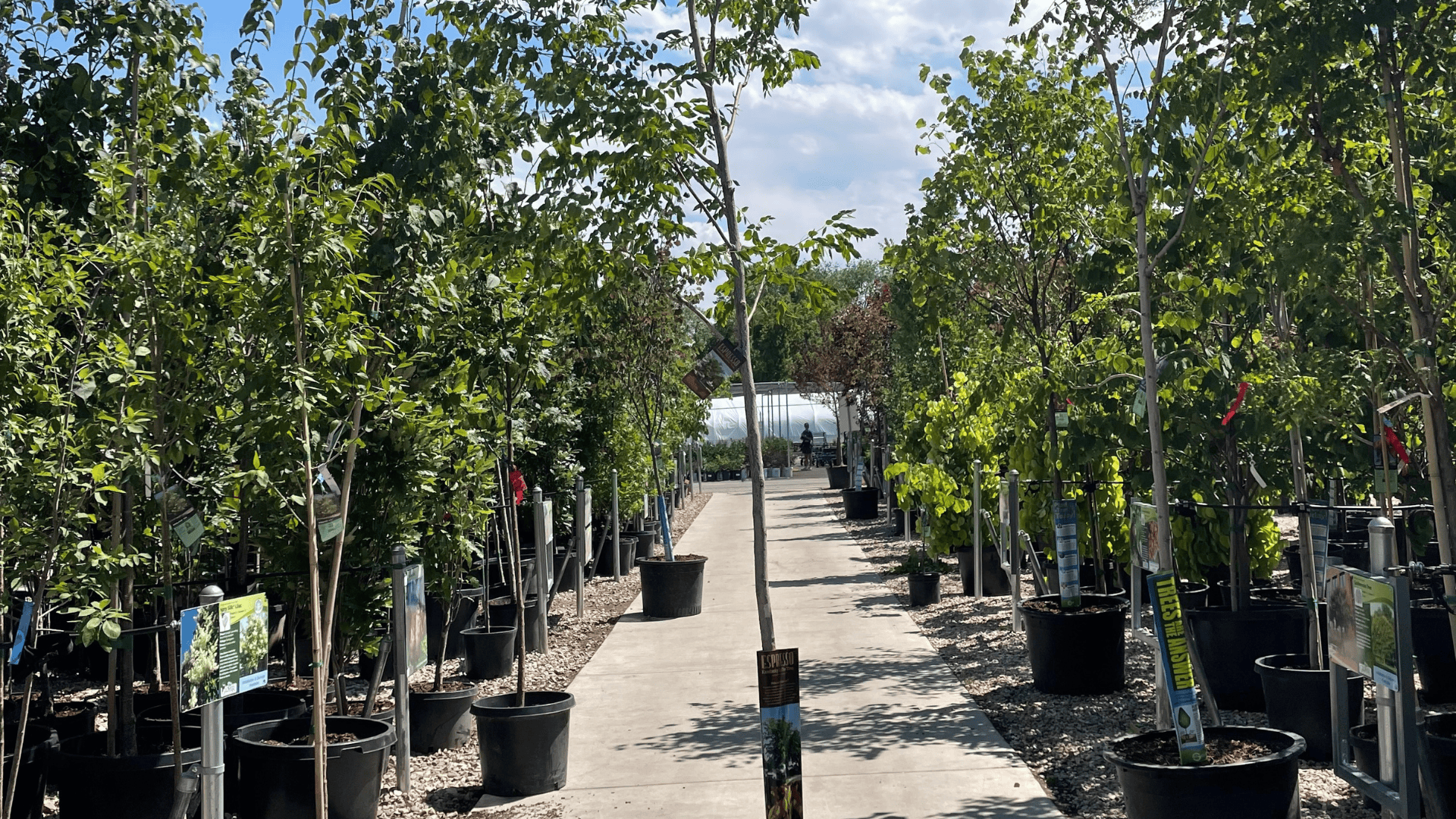
Gardeners keep coming back to Glover Nursery because we know what grows in Utah, and we’re honest about what doesn’t. Our staff goes beyond selling our nursery trees; we help you match the right tree to your soil, your water source, your sun exposure, and the size of your space. Plus, we offer long-term support to help you with any problems that may arise while your new plant is getting established in your yard.
Here’s what sets us apart:
- Utah-tested varieties: We only carry trees that will succeed in Northern Utah conditions. If it is available at our nursery, it can grow in your yard!
- Expert staff: our team will help you find the right tree for your specific conditions. First-time gardener or a seasoned green-thumb, we’ll help you with everything you need to know.
- Delivery across Northern Utah: we bring trees, shrubs, and gardening supplies right to your home.
- 1,200+ Google reviews with a 4.5 start average: our customers trust us with their landscapes and come back year after year.
- Family owned and operated for over 130 years: The Glover family is in its sixth generation of family members helping you grow.
- 7 acres of inventory: Glover Nursery sports the largest selection of tree varieties available in one location in West Jordan, Utah.
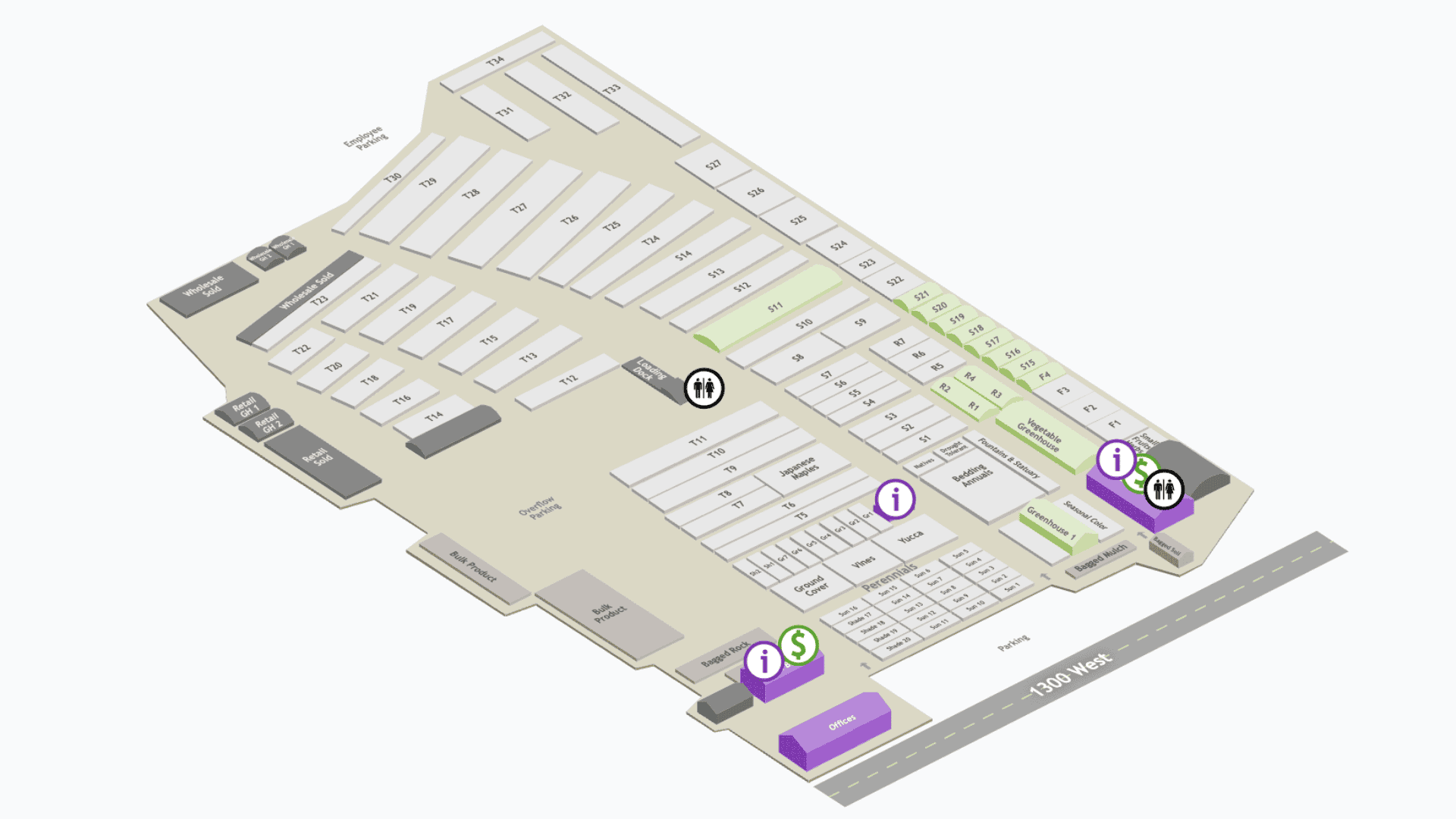
Our trees section starts at T-06, just east of our large selection of perennial grasses, and goes all the way to the east side of the nursery, ending at row T-23 with our larger specimen shade trees.
Customers regularly tell us they’ve never seen a nursery with this many options. Many also say our staff made them feel comfortable, even when they walked in knowing nothing about our nursery trees. And that’s exactly the kind of experience we’re going for.
First-time gardeners walk the lot with our team and leave feeling more confident than when they arrived. And gardeners who’ve been coming to us for over a decade keep coming back because of the quality and our unmatched warranty. The trust in our expertise, as in the quality of our product, is what we’ve built this nursery on.
Want to browse before you visit?
Check out the tree selection in our catalog. We do carry more on-site than what’s listed online, and our inventory changes regularly throughout the season. It’s always worth a visit to see the full inventory in person. We invite you to send us a general inquiry to see if we currently stock the tree you’re after.
Keeping Your Trees Healthy in Utah
Buying the right tree is half the job. The other half is taking care of it properly through the seasons and ensuring it thrives in your yard. Here are some of our most useful tree care resources that could help you out:
Tree Planting Guides
Planting Guide
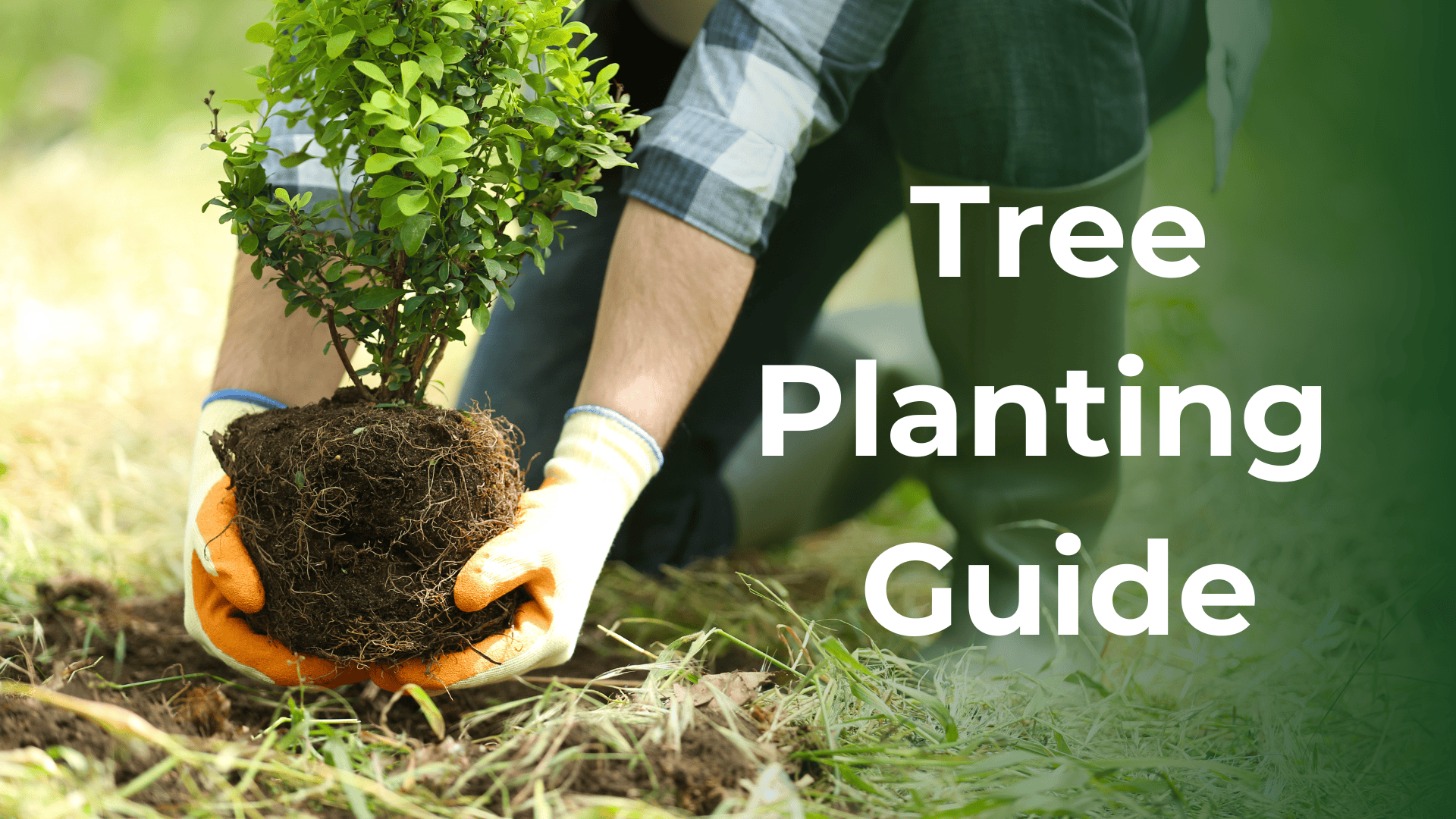
Proper planting depth, hole size, and soil prep all affect how well your tree establishes. Follow our planting instructions to give your new tree the best chance.
Seasonal Plant Care Guide
Our seasonal plant tips page covers month-by-month tasks for trees, shrubs, lawns, and flower beds across every season.
Tree Watering Guides
New Trees
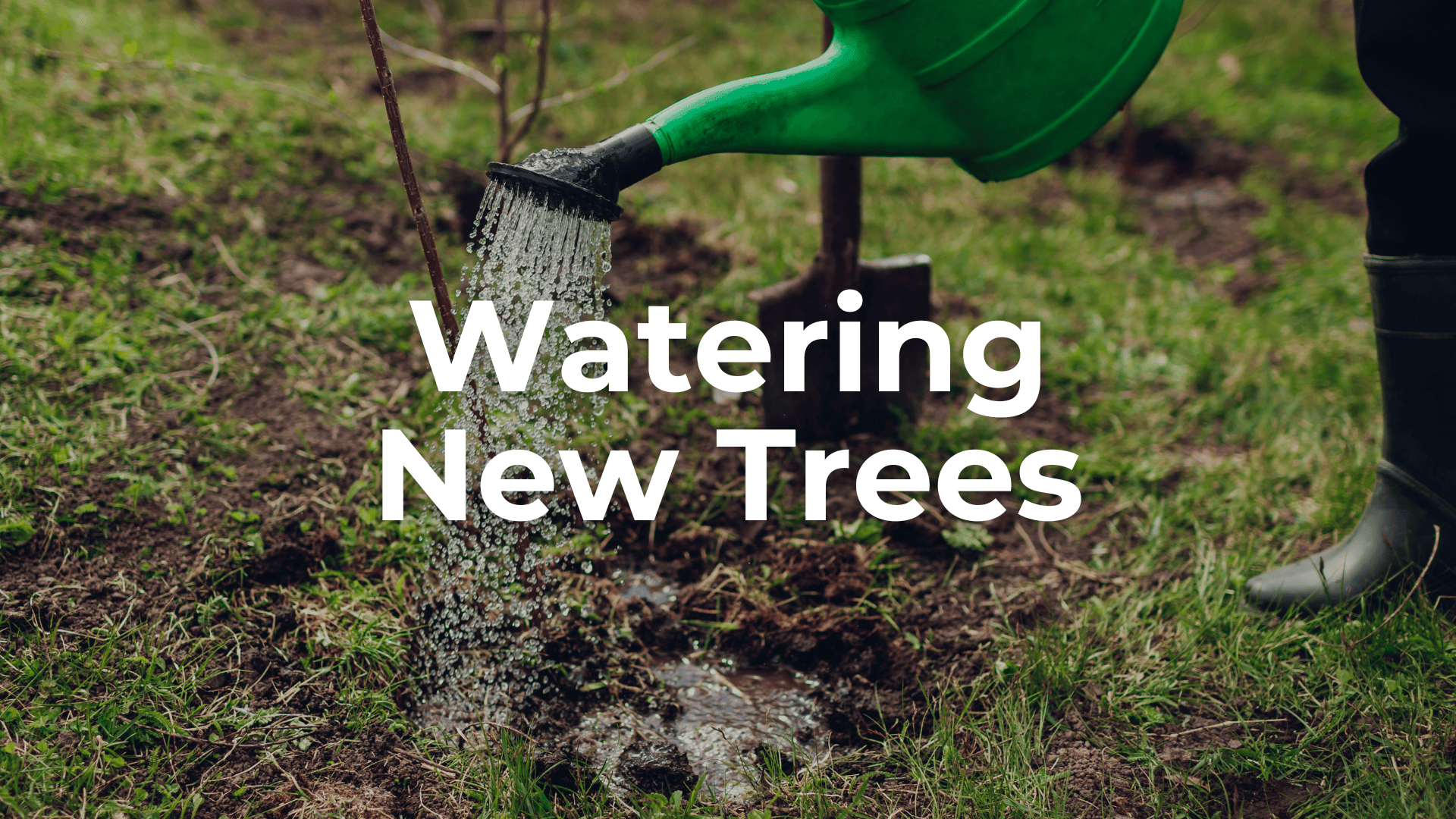
Newly planted trees need deep soaking two to three times per week during their first growing season. Sprinklers alone aren’t enough. Follow our tree watering instructions for a full breakdown.
Established Trees
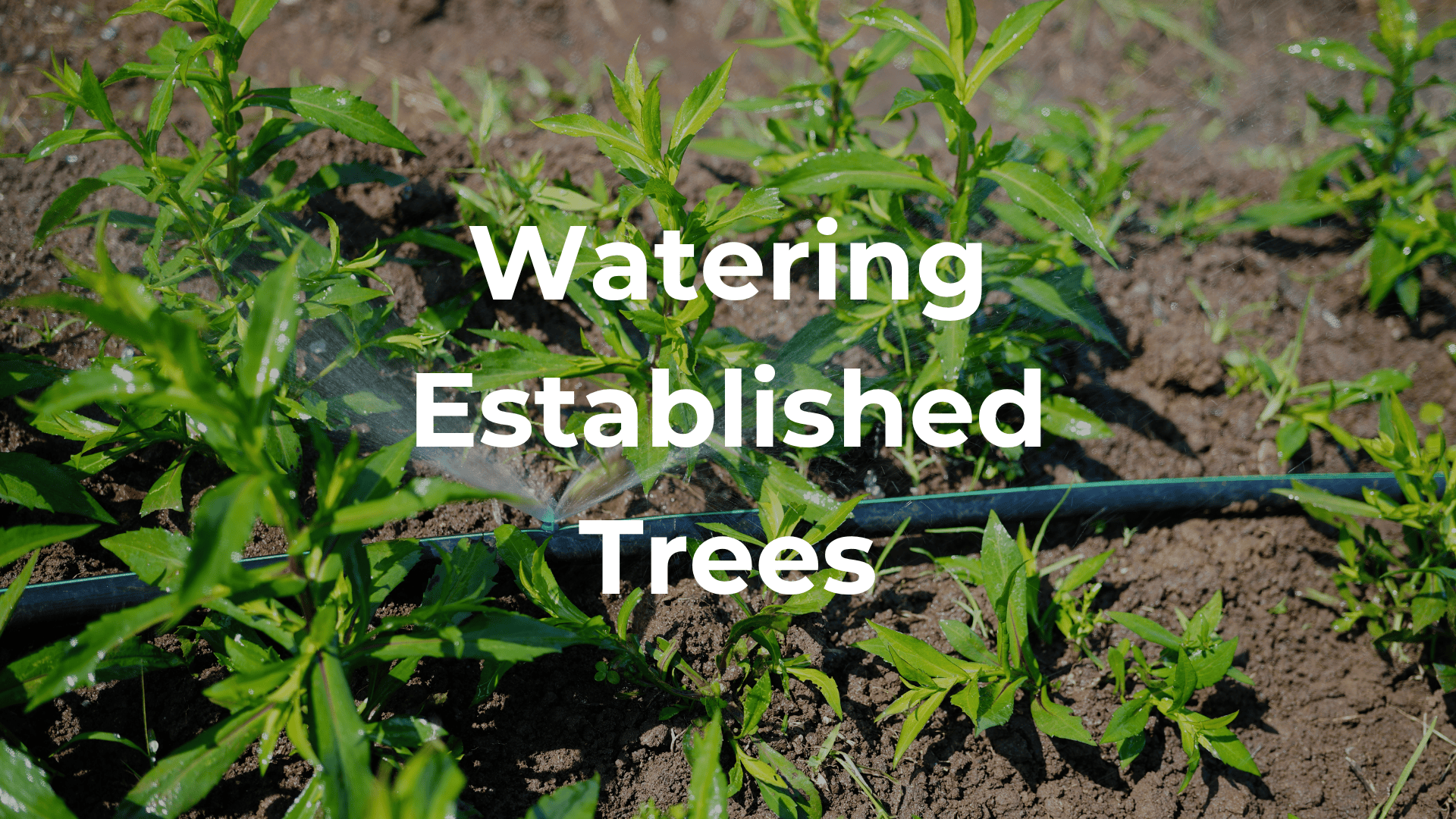
Even mature trees need a deep soak once or twice a month during summer, and monthly through winter. Our guide on watering established trees covers what to do and when.
Winter Watering Guide
Northern Utah’s dry winters can be just as hard on a young root system as summer heat. See our winter watering and tree care guide for specifics.