Mulching is often part of spring garden cleanup, but applying mulch in the fall offers important benefits as plants prepare for winter. A layer of mulch helps insulate the soil, moderate temperature fluctuations, and protect plant roots as the seasons change.
In Northern Utah, winter conditions can include hard freezes, dry air, and significant temperature swings. These fluctuations can cause the soil to freeze and thaw repeatedly, potentially disturbing roots and stressing plants.
Applying mulch before the ground freezes helps maintain more consistent soil temperatures, conserve moisture, and provide added protection for your garden through the colder months.
The information below provided by Glover Nursery covers what to use, when to apply it, and how to get the most out of your fall mulch in Northern Utah, which encompasses USDA Zones 4a-7b.
What Is Mulch?
Mulch is any material you spread over bare soil to protect it. It falls into two categories: organic and inorganic.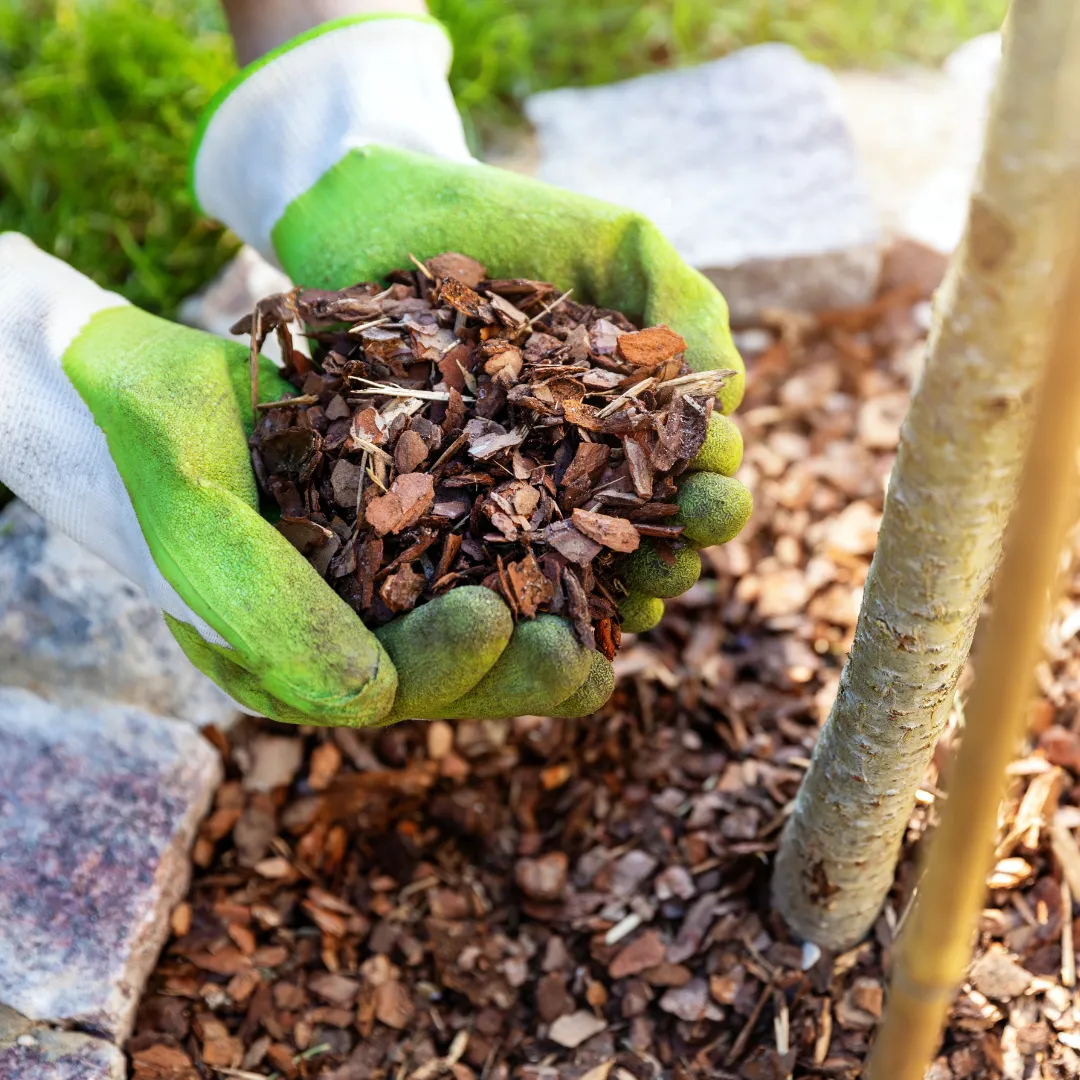 Organic mulch includes bark, compost, wood chips, deciduous leaves, and straw.
As organic mulch breaks down over time, it adds organic matter to the soil, improving soil structure and supporting a healthy community of beneficial soil microorganisms.
Inorganic mulches, such as rock and gravel, do not decompose like organic materials, so they require little to no replenishing over time, but do not help improve soil structure.
Though both types of mulch have benefits, for protection of your plants, we recommend using organic mulch. We’ve put together a full breakdown of every mulch type in our ultimate mulch guide if you want the deep dive on materials.
How Fall Mulching Helps Protect Your Landscape Through Winter
Northern Utah’s winters bring fluctuating temperatures, dry conditions, and periods of freezing and thawing that can affect both plants and the soil beneath them. A properly applied layer of mulch helps moderate these conditions, providing several benefits that carry through winter and into the growing season.
Freeze-Thaw Damage
Repeated freezing and thawing can cause soil to expand and contract, sometimes pushing shallow-rooted perennials and newly planted plants upward and exposing their roots and crowns.
This process, known as frost heaving, can leave plants vulnerable to winter injury. Mulch acts as an insulating layer, moderating soil temperature fluctuations and helping reduce the conditions that contribute to frost heaving.
Supporting Soil Health
Healthy soil is home to a diverse community of microorganisms, fungi, and other organisms that contribute to nutrient cycling and soil structure.
As organic mulch gradually decomposes, it provides a source of organic material for soil organisms and contributes to the development of healthier soil over time. Mulch also helps moderate soil temperature and moisture, creating more consistent conditions for soil biological activity.
Weed Seed Buildup
A layer of mulch helps reduce weed pressure by limiting the amount of light that reaches the soil surface, making it more difficult for many weed seeds to germinate and establish.
It also creates a physical barrier that can make it harder for emerging weeds to reach the surface. Applying mulch in fall helps maintain this protective layer into spring, although some persistent weeds may still emerge and require attention.
Conserving Soil Moisture
Even during cold months, moisture can be lost from exposed soil through evaporation, particularly during dry, windy weather. Mulch reduces evaporation from the soil surface, helping retain moisture in the root zone.
This is especially valuable in Northern Utah, where winters often have extended periods of dry weather and minimal precipitation. While mulch helps conserve existing soil moisture, it does not replace the need for occasional winter watering when conditions are dry and the ground is not frozen.
Be sure to read our Winter Watering guide for easy ideas.
Which Mulch for Which Job is the Best?
 Not every mulch functions the same way. . The right choice depends on what you’re mulching and why. Below are some suggestions of which products will work best for your landscape. When you’re ready to move forward with your selection, we can help with both bulk and bagged product options.
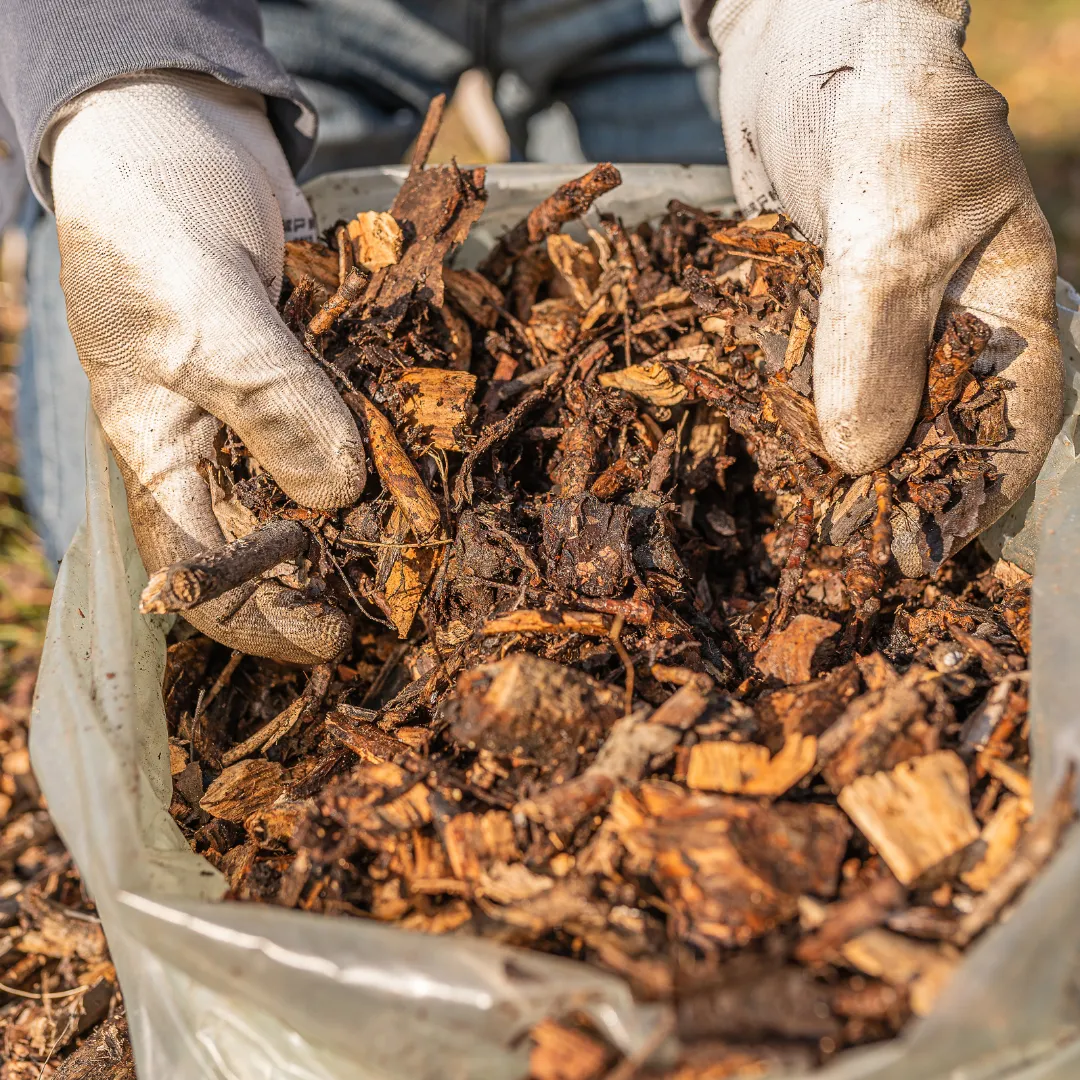
Best Mulch for Ornamental Beds, Trees, and Shrubs: When it comes to the best mulch for winter protection, small bark or shredded bark is your best bet.
Bark lasts between two to four seasons, looks clean, and insulates well through winter. Shredded bark knits together over time, which means it stays put in wind and rain. We carry small bark and shredded bark in both bulk and bagged options.
Best Mulch for Vegetable Gardens and Annual Beds: Compost or Harvest Supreme works best in beds where you will be planting every year. These break down faster, usually within one to two seasons. That’s actually what you want. They feed the soil with nutrients as they decompose, which means your next round of vegetables gets better soil to grow in.
Best Mulch for Perennial Beds: Soil Pep is a solid option for perennial beds. It breaks down in one to two seasons and does wonders for clay soil structure. If you’re gardening in the Salt Lake Valley, you’re probably dealing with heavy clay.
Soil Pep works down into the soil and helps put organic matter between the particles of clay, which creates better soil structure and helps with balanced moisture retention. Over time and helps water drain instead of pooling.
Best Mulch for Foundations and Walkways: Use shredded bark or small bark near your house. Bark mulches offer a cleaner option that will both look nice and be easier to maintain.
Best Mulch for Slopes: In general, selecting an option like shredded bark or small bark will work well on sloped yards. They offer a tiny bit more weight, which will help to keep them in place during normal rainfall. Lighter options have a tendency to wash downhill in a storm.
A Quick Note on pH
Northern Utah soils tend to be alkaline, which makes it harder for some plants to absorb iron and other nutrients. Even mulch won’t fix that since they don’t significantly change soil pH.
If you’re growing acid-loving plants like hydrangeas, ask our team about amendments that can help. Oftentimes, choosing plants that handle our alkaline soil is the easier route.
Watch Out for Salt Splashes!
Northern Utah’s naturally alkaline soils already present challenges for many landscape plants. During winter, road salt and homeowner-applied ice melt can add to those challenges by increasing salt concentrations in surrounding soils.
As snow and ice melt, dissolved salts can move into nearby landscape beds through runoff, while passing traffic can carry salt spray onto plants and soil. Beds along driveways, sidewalks, and street-facing areas are particularly vulnerable to repeated exposure.
While mulch cannot prevent salt from reaching the soil, maintaining a generous layer of organic mulch in fall offers several important benefits for your landscape. Mulch helps insulate the soil, moderate temperature fluctuations, conserve moisture, and protect the soil structure.
These benefits help maintain a healthier root environment as plants move through winter and prepare for spring growth.
As you prepare your landscape for winter, avoid piling snow from salted driveways and sidewalks directly onto planting beds. In spring, once the soil has thawed and drainage conditions allow, thoroughly watering affected areas can help flush accumulated salts from the root zone.
When to Mulch in Northern Utah
For the Salt Lake Valley and West Jordan areas, fall is a good time to refresh existing mulch and prepare newly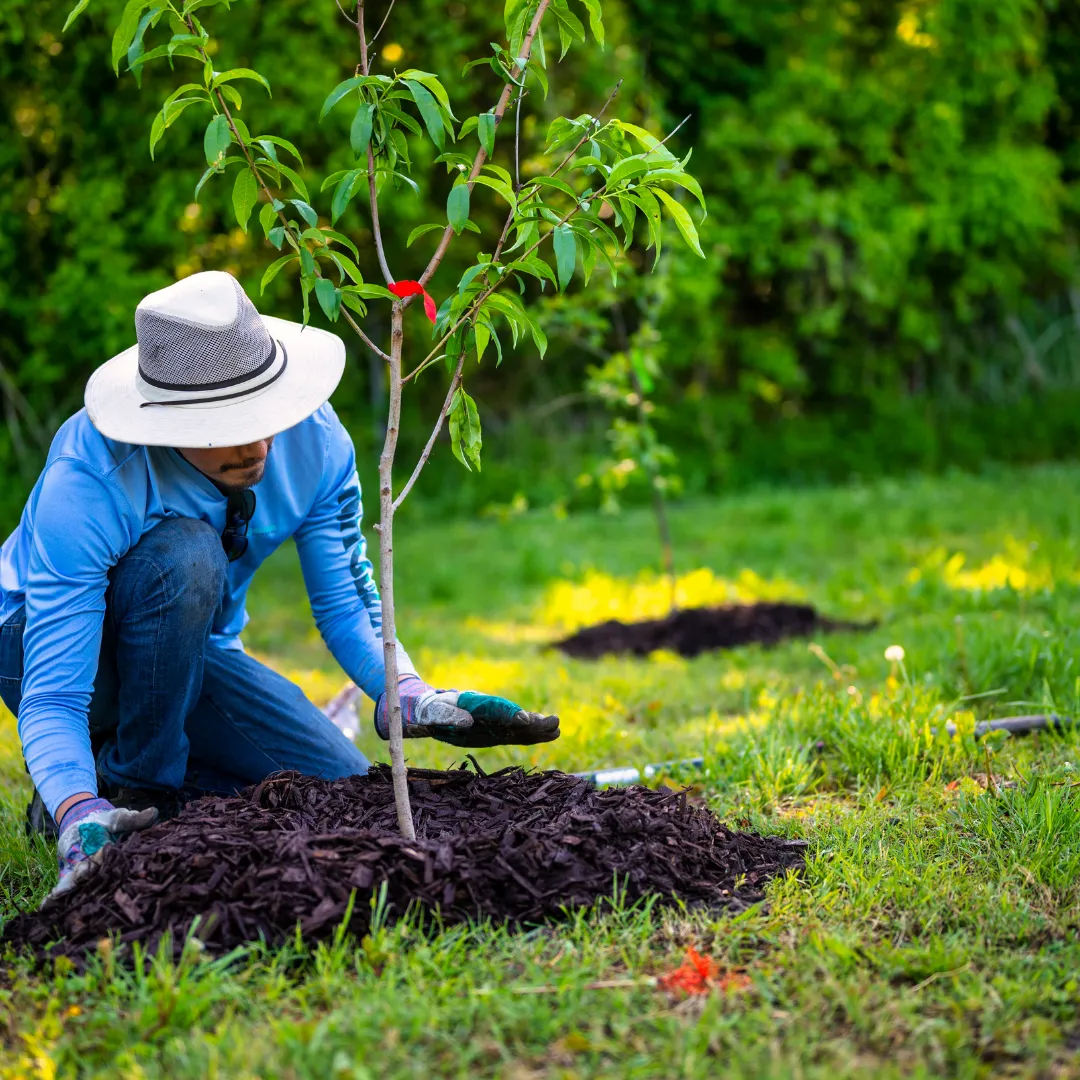 planted landscapes for winter. However, the ideal timing depends on what you’re mulching and why.
For trees and shrubs, organic mulch can be applied after fall planting to help conserve soil moisture, moderate soil temperatures, and protect roots. For established landscape beds, fall is also a convenient time to replenish mulch that has decomposed or thinned over the growing season.
USU Extension recommends applying organic mulch immediately after fall planting or in spring once the soil has warmed.
Winter protection for certain perennials and bulbs is a little different. If your goal is to protect shallow roots and crowns from repeated freezing and thawing, wait until the soil has begun to freeze before applying a protective winter covering. Applying this type of mulch too early can delay soil cooling and, in some cases, interfere with plants entering dormancy.
If you’re planning a bulk mulch delivery, it’s worth ordering ahead during the busy fall season rather than waiting until the weather turns. Whatever the timing, remember that proper mulch depth and placement are just as important as when you apply it.
How to Apply: Edge Prep, Depth, and Glover’s Expert Tips
Mulching a garden for winter isn’t complicated, ut a few small steps can make a big difference in results. Here’s what our team recommends for a solid application:
Prepare Your Beds Before Mulching
Before applying fresh mulch, take time to assess and prepare your planting beds. Remove established weeds, clear away dead annual plants and diseased plant material, and address any debris that could harbor pests or disease. Healthy fallen leaves can be left in place if they are finely shredded and won’t form a dense layer over plants. Starting with a well-prepared bed allows you to apply mulch evenly and helps maintain a healthy growing environment throughout winter.
Edge Your Mulch Before Spreading
Here’s a tip from our team that saves a lot of frustration: Take a flat shovel and cut the soil down about two inches below your concrete edges before spreading mulch. That little channel keeps mulch from migrating onto your walkways and driveway all winter.
Get the Depth Right
Two to four inches works for most fall applications. Go any deeper than four inches on flat ground and you risk suffocating roots and blocking water from reaching the soil.
Keep It Away from Trunks and Stems
Keep mulch four to six inches away from tree trunks and plant stems. Build a berm, which is basically a donut shape pile, instead of piling it high like a volcano right against the trunk of the tree. Mulch piled against bark traps moisture, invites rot, and creates hiding spots for insects. . It’s one of the most common mulching mistakes, and it causes plants harm rather than protecting them.
Protect Small Plants While Spreading
Another tip from our team: set a small bucket upside down over small plants while you spread mulch around them. Pull the bucket off when you’re done. It keeps you from accidentally burying crowns under a pile of bark.
Skip the Landscape Fabric
Don’t put landscape fabric under organic mulch. It defeats the purpose. Organic mulch is supposed to break down into the soil and feed it. Fabric blocks that entire cycle and creates a matted mess within a season or two.
Want to see these tips in action? Here’s a quick walkthrough from Ryan Glover showing how to prep and mulch a fall garden bed. It covers edging, depth, and spreading techniques in a real Northern Utah yard.
Common Mistakes Gardeners Make When Mulching in the Fall
Mulch offers many benefits, but improper application can create problems for your landscape. A few common mistakes are easy to avoid with the right approach.
Piling mulch against tree trunks, often called volcano mulching, is one of the most common. Constant contact with moist mulch can keep bark too wet and contribute to decay. Deep piles can also conceal the root flare and provide shelter for rodents. Instead, spread mulch in a broad, even layer, keeping it several inches away from the trunk and leaving the root flare exposed.
Applying too much mulch can be just as problematic. Excessively deep layers may restrict air exchange, interfere with water penetration, and retain too much moisture around roots. For most Northern Utah landscapes, USU Extension recommends approximately 3 to 4 inches of organic mulch. Check the existing depth before adding more, rather than continually layering fresh material over old mulch.
Choosing the right mulch material depends on your landscape’s needs. Organic mulches, such as bark and wood chips, gradually decompose and contribute organic matter to the soil while helping conserve moisture and moderate soil temperatures. Rock and gravel are durable alternatives for certain landscape applications, but they do not improve soil organic matter and can become quite warm in sunny locations.
Timing also depends on the purpose of your mulch. Fall is a convenient time to replenish mulch around established trees and shrubs or protect newly planted landscapes. However, if you’re applying mulch specifically to protect perennial crowns from repeated freezing and thawing, wait until the soil begins to freeze. There is no single calendar date or air temperature that applies to every landscape.
Proper material selection, appropriate depth, and correct placement will help you get the most benefit from your mulch while supporting healthy soil and plant roots.
How Much Mulch Do You Need?
 One cubic yard of mulch covers roughly 100 square feet at three inches deep. If you’re looking for a precise number, our mulch calculator will come in handy. Use this to measure your beds, plug in the desired depth, and it tells you exactly how many yards to order.
Now, the question most people have is whether to go bulk or get bagged product. If you need more than about ten bags’ worth, bulk is more cost-effective. Many people prefer getting bagged products as it is easier to carry a small bag around the yard than filling up a wheelbarrow repeatedly.
If you need more than 3 cubic yards, or if you don’t want to rent a pickup truck, we offer bulk delivery throughout the Salt Lake Valley.
Post-Fall Mulching Guidelines
As winter transitions into spring, take a few minutes to evaluate the mulch in your landscape beds. Most established landscape mulch does not need to be removed or pulled back each spring. Instead, check its depth and condition, and make adjustments where needed.
For perennial beds, gently move aside any thick winter coverings that were applied specifically to protect plant crowns once the threat of severe freezing has passed and new growth begins to emerge. Avoid disturbing emerging shoots, and keep mulch from covering perennial crowns or stems.
Organic mulch naturally decomposes over time, adding organic matter to the soil. This material does not need to be removed; simply leave it in place and replenish areas where the mulch layer has thinned. Before adding fresh material, check the existing depth to avoid building up an excessively thick layer.
A little spring maintenance helps preserve the benefits of fall mulching while preparing your landscape for the growing season ahead.
Get Your Beds Ready This Fall!
Fall mulching is one of the easiest things you can do for your Northern Utah garden before winter. The payoff is huge for the effort involved. A few hours of work in October saves you from dead roots, weed problems, and dried-out soil come spring.
For more guidance, check out our blogs or send us a question through our general inquiry form. Still, nothing beats stopping by the nursery and asking our team in person, since they can walk you through your exact situation.