Peonies have been a favorite of ornamental gardeners for centuries and it’s easy to see why. Their large, multi-petaled flowers are rivaled only by roses for their array of colors, shapes and fragrance, and the plants themselves can live for 50 years or more. And when it comes to caring for peonies, they are one of the easiest garden plants to grow!
What are the three types of Peonies?
The three most common types of peonies that you’ll find in the garden center are Herbaceous Peonies, Tree Peonies, and Itoh Peonies. Each type will give you gorgeous flowers, but there are some key differences between them.
Let’s break down these three types of Peonies:
Herbaceous Peonies
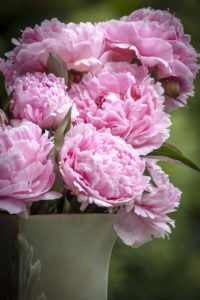
Herbaceous peonies are the most common style of peony that you’ll find in landscapes and garden centers. These are also called garden peonies. These peonies are characterized by their herbaceous growth habit, with leafy growth in the early Spring followed by large, full, multi-petaled flowers. Their stems are typically pruned back in the Fall, and then reemerge the following Spring. Because of this herbaceous growth, these types of peonies often need staking with round cages to keep their flowers from flopping over.
Popular varieties of Herbaceous Peonies
Sarah Bernhardt Peony
Karl Rosenfeld Peony
Coral Charm Peony
Tree Peonies
Tree peonies are not actually trees, but large deciduous shrubs that retain a strong woody stem structure above ground. Their flowers are often larger than Herbaceous types. These shrubs are slow growing but can grow 3’-5’ tall and wide, and even larger with age. These peonies have been difficult to find in garden centers in recent years due to their slower growth habit, but are worth the wait for their dramatic size and structure.
Itoh Peonies
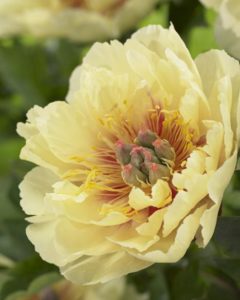
In response to the slow growth of Tree Peonies and floppiness of Herbaceous varieties, plant breeders have created hybrids of the two – called Itoh, or Intersectional Peonies. These varieties combine faster-growing, herbaceous growth with stronger stems that more easily hold up their larger flowers, which bloom later in the Spring than their herbaceous counterparts. Itoh peonies are more readily available than Tree varieties, and boast some of the biggest and most vibrant flowers on the market.
Fun fact: The Itoh Peony is named after Japanese plant breeder Toichi Itoh, who was the first to successfully breed Herbaceous and Tree varieties.
Popular Itoh Peonies
Bartzella Itoh Peony
Cora Louise Itoh Peony
Julia Rose Itoh Peony
How to Care for Peony Flowers
One of our favorite things about peonies, besides their beautiful flowers, is how easy they are to care for in Utah. While some plants struggle with Utah’s tough soils and conditions, peonies handle them quite well.
Hardiness
Cultivated peonies trace their roots back to high-elevation sites in Asia that have cold winters similar to those of Northern Utah. In fact, peonies typically need a cool, dormant period in order to produce their flowers. The cold hardiness of different varieties of peonies can range from Zone 3 to 8, so there are plenty of options for both lower elevations like the Salt Lake Valley as well as high elevation areas like Park City and Heber.
Light
Peonies grow best and develop larger flowers in full sun, which is at least 6 hours of sunlight per day. Because of Utah’s elevation and dry heat, most peonies do benefit from some shade or filtered sunlight, especially in the afternoon and evening when the sun is at its most intense. Because peonies are a Spring bloomer, their flowers are mostly past their prime when the full heat and sun of the Summer arrives.
Water
Water needs for peonies are moderate, but they do require ample soaking and time for the soil to dry out in between waterings. Peony leaves are susceptible to powdery mildew caused by wet foliage, so drip irrigation is recommended. Peony roots don’t like to be waterlogged, so make sure to identify your soil type and water accordingly.
Soil
Peonies prefer well-draining, neutral to slightly acidic soils, but can grow well in a variety of soil types and are quite resilient. They can even handle dense, clay soil so long as it’s not consistently waterlogged. When planting, we recommend amending your soil with composted organic material to help improve drainage.
Peonies and Salt Tolerance
Some parts of Utah have salty, alkaline soils that some plants do not like, as well as salty secondary water from Utah Lake. Peonies are fairly tolerant of alkalinity and salts, both in water and soils, but we do recommend flushing them with culinary water periodically to remove excess salts.
Fertilizing Peonies
Peonies perform best with three feedings a year:
- When stem shoots emerge in early Spring, or Herbaceous growth appears on Tree Peonies: 10-10-10 fertilizer
- When flower buds appear: 10-10-10 fertilizer
- In the Fall to encourage root development before Winter: 5-10-10
Planting Peony Bushes in Utah
As with most all of your shrubs and herbaceous plants, proper planting results in greater success. Dig your hole about twice as wide as the root ball of the peony, and only just as deep. Amend your soil with composted organic material or a pre-mixed soil amendment to help create good drainage and backfill the hole. We recommend adding a layer of bark mulch around the peony to help regulate moisture and temperature.
Peony FAQS
Do peonies need support to stand up straight?
Peony cages are a common sight in garden centers and in the gardens of peony aficionados. For herbaceous peonies, cages and supports can help keep flowers from flopping over and breaking. Tree peonies have enough support from their woody stems so they are just fine without extra help. Itoh peonies are bred to have stronger stems to support their flowers, though some varieties benefit from extra support.
Buying Peony Tubers versus Pre-potted Plants
Occasionally you will see Peonies sold as tubers in the Fall alongside other Fall-planting bulbs like Tulips and Daffodils. These are always Herbaceous types, and divided tubers is a common propagation method that is more economical compared to container plants. Keep in mind that pre-potted container peonies are old enough to produce blooms, but peonies planted as tubers often take a few seasons to establish before blooming.