
Flowers in bloom are one of our very favorite sights and helleborus are some of the first blooms you will see in late winter – even if the ground is still covered in snow! There are all kinds of varieties of helleborus ranging from white to black. We love them because they are beautiful, fragrant, and long-lasting – they will bloom until May. Along with their pretty flowers, helleborus have evergreen foliage so they are a great addition to your garden for year-round interest. Once established, these early spring flowers are quite easy to care for.
Do take note: helleborus plants are poisonous when ingested. They keep away pests but also, make sure to keep children and pets away from them.
Planting Helleborus
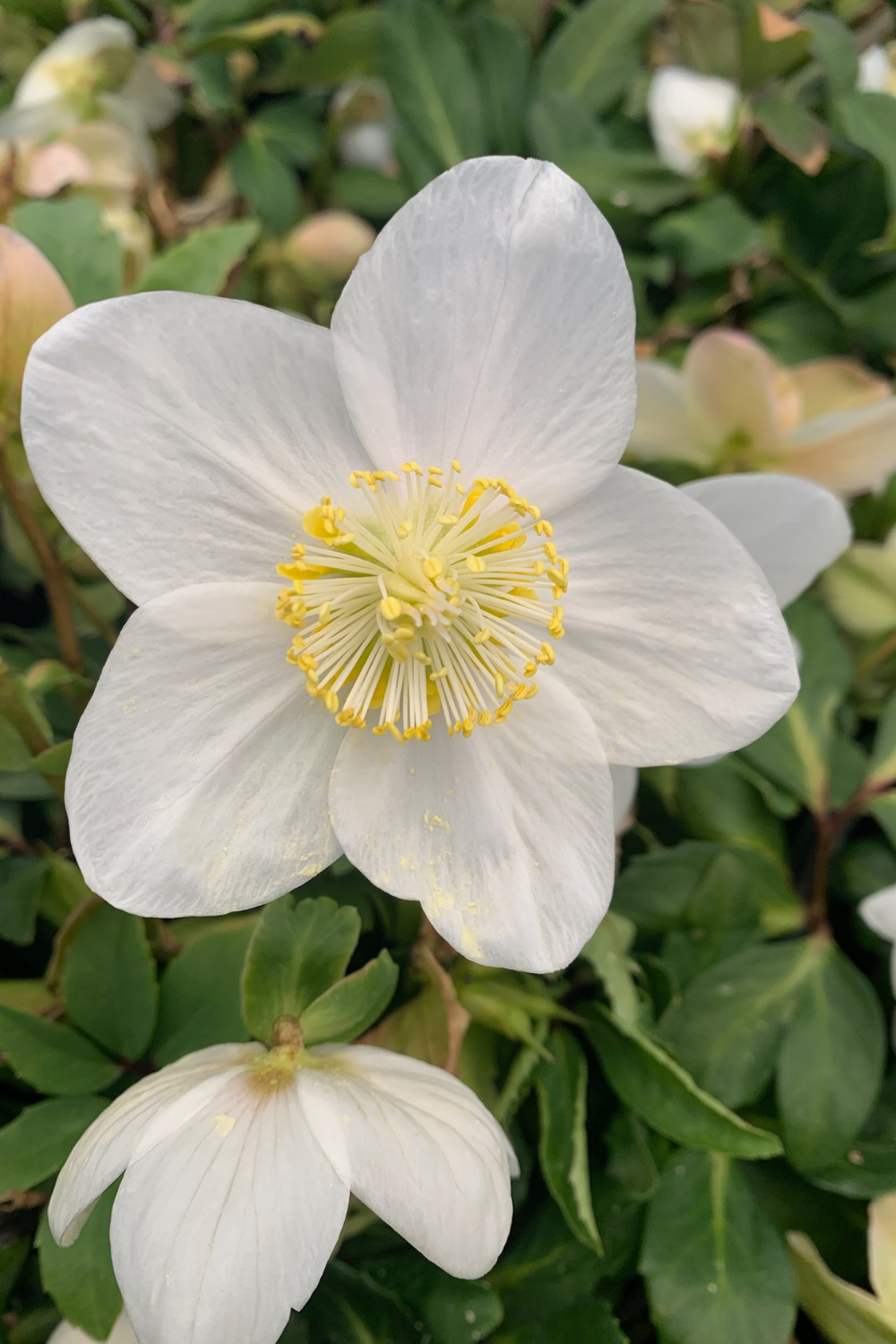
The variety we have at our garden center is Helleborus orientalis which is also known as the Lenten rose due to the fact it begins to bloom during the Catholic season of Lent. Lenton Rose (also known as Christmas rose) is one of the most varied types of helleborus, and blooms can come in many different colors, most commonly: white, purple, maroon, and orange.
You can plant helleborus anytime between late winter to early fall so that the plant has time to root before it’s the dead of winter.
1. Choose Your Planting Spot
Ideally, when you start a garden for your helleborus, you would plant it under a deciduous tree so that it has shade in the summer but can also receive full sunlight in the winter once the tree has lost its leaves. If that’s not an option, go for a shaded spot it is good for your young plants, so they can avoid direct sunlight during the summertime. The blooms of the plant face downwards so consider planting on a mound or hill to better see and enjoy them.
2. Prep Your Plant Soil
When growing helleborus, it’s recommended to use compost or other organic matter to amend loamy, well-draining soil. Avoid fertilizer when you first plant your hellebore to steer clear of burning the roots. Dig a hole as deep as the hellebore’s pot and make sure there’s at least a foot of space between holes to give the plant space to grow.
3. Growing Your Plants
Place the root of the hellebore into your hole and cover it with dirt. Avoid covering the crown of the plant. Pack down the soil by immediately watering the plant. Wear gloves when handling hellebore to get a high quality plant as they can cause mild skin irritation.
Maintain Your Helleborus Flower Plant
As we mentioned, once they are established, hellebores are easy to maintain. They just need a little TLC to help them along. Here’s some planting tips you can do:
- Water the plants often when they are young, about 1 inch a week.
- Keep an eye out for pests or diseases and treat them accordingly.
- Helleborus Plants self-sow and will drop seeds that will start to grow in the areas around them. To avoid overcrowding, pluck the seedlings with their roots as you see them.
- In early winter, prune the plant down to the ground to allow new foliage to bloom come late winter.
You may have seen different ways of spelling Hellebore, Helleborus, Hellebores, but rest assured, they’re all the same!
Make sure that you are signed up for our newsletter so that you don’t miss all the latest garden nursery news in Utah from Glover including tips & tricks and new products.