
Utah residents use about 96 gallons of water per person each day, and landscape irrigation swallows between 50 and 65 percent of that total. The proper use of native plants can cut that number dramatically.
Species that evolved in our alkaline soils, cold winters, and dry summers need little to no supplemental water once their roots take hold. Interestingly, researchers have cataloged over 385 woody plants native to Utah, so homeowners have far more choices than most people realize.
This page is your shopping and planning guide for Utah native plants, organized by landscape goal and plant type. Glover Nursery has grown alongside Salt Lake Valley for six generations. Our team can walk you through every option listed here.
Browse our current selection of Utah native trees, shrubs, perennials, and grasses below. Inventory changes through the growing season, and availability varies by species. If you see something you want or need help narrowing your choices, call us at (801) 282-5358. Our team can check what’s on the lot right now and set plants aside before you make the drive.
Visit Glover Nursery
Explore Utah Native Plants
Call us to check inventory
Why Plant Utah Natives?
Native plants do more than hold on in Utah’s climate. They thrive here because they’ve spent thousands of years adapting to our climate, our soils, and our rainfall patterns.
Once established, most need little to no supplemental watering, which means lower water bills and less labor required. They’re some of the most drought-tolerant plants Utah homeowners can grow.
The practical benefits go beyond water savings. Native species resist local pests and diseases without chemical treatments, so you can skip the fertilizer and cut back on pruning. Their deep root systems hold soil in place, manage stormwater runoff, and build healthier soil over time.
That healthier landscape supports more than your plants. Native species form the base of Utah’s food web, turning your yard into habitat for birds, bees, butterflies, and other beneficial organisms.
A native yard doesn’t have to look wild or chaotic, either. Utah native plants fit into any garden style, from modern to cottage, and mix well with traditional landscape plants. The difference is lower water, less maintenance, and more wildlife.
Sorting Utah Native Plants by Type
Below you’ll find our favorite northern Utah native plants for landscaping, organized by type. Each entry includes the botanical name, mature size, and water needs so you can compare species and plan your layout.
Best Native Trees in Northern Utah
Gambel Oak aka Scrub Oak (Quercus gambelii) reaches 15 to 25 feet on low water and as a keystone species supports roughly 280 caterpillar species. Birds and mammals depend on its acorns, and the fall color rivals anything in the eastern states. It’s the backbone of a native landscape.
Bigtooth Maple (Acer grandidentatum) grows 20 to 30 feet on low-to-moderate water. USU’s CWEL program has studied it for water-efficient landscapes, and it delivers some of the best reds and oranges you’ll find on a native tree in the valley.
Serviceberries (Amelanchier alnifolia and A. utahensis) stay compact at 10 to 15 feet. White spring flowers give way to small purple berries that birds fight over through summer. The shrubby form works as a screen or understory planting, too.
Rocky Mountain Juniper (Juniperus scopulorum) handles wind, poor soil, and exposed sites at 15 to 30 feet on very low water. It’s one of the few native evergreens that stays full and green through our infamous Utah winters.
Piñon Pine (Pinus monophylla and Pinus edulis) tops out around 10 to 20 feet and produces edible nuts that have fed people across the Southwest for centuries. It’s slow-growing but long-lived, and the dense canopy gives year-round cover for birds.
Both conifers hold a landscape together through winter when deciduous species go bare.
Browse our full tree library below for additional shade, columnar, and ornamental varieties. For a curated list, 32 great trees for Utah yards is a good starting point.
Well-Performing Native Shrubs in Northern Utah
Rabbitbrush (Ericameria nauseosa) stands three to five feet tall, needs very little water, and blooms golden yellow in fall when pollinators need it most.
Apache Plume (Fallugia paradoxa) reaches three to six feet and earns attention year-round. White flowers give way to feathery, pinkish seed heads that glow in low light.
Curl-leaf Mountain Mahogany (Cercocarpus ledifolius) is an evergreen workhorse at six to fifteen feet that fixes nitrogen in the soil and handles extreme drought.
Manzanita (Arctostaphylos x coloradensis) stays low at one to three feet with evergreen leaves. Its early spring blooms feed the first bees of the season.
Three-Leaf Sumac (Rhus trilobata) grows three to six feet, needs very little water, and turns fiery in fall. Utah gardeners recommend it for park strips because it handles full sun without fuss.
Big Sagebrush (Artemisia tridentata) brings the iconic silver-green foliage and clean scent of the Intermountain West at three to six feet.
Fernbush (Chamaebatiaria millefolium) rounds out the shrub group with white flowers and fern-like foliage, performing on harsh, dry sites where other shrubs fail.
We carry dozens more of Utah native shrubs beyond this list, including flowering varieties for every spot in your yard. You can browse our full collection of flowering shrubs to learn more.
Best Native Perennials and Wildflowers for Northern Utah
Rocky Mountain Penstemon (Penstemon strictus) is the most common garden Penstemon in Utah. It reaches 18 to 24 inches with blue-purple flowers that bees and hummingbirds compete over in late spring.
Palmer’s Penstemon (Penstemon palmeri) towers over its cousins at three to five feet with light pink, grape-scented flowers you’ll notice from several feet away.
Firecracker Penstemon (Penstemon eatonii) stays more compact at 18 to 30 inches and produces the bright red tubular flowers hummingbirds favor.
Fun Fact: Utah grows more than 100 Penstemon species alone, earning the state its reputation as the Penstemon capital of the world!
Add in the 385-plus native woody plants cataloged by Utah State University, and homeowners have far more choices than most people realize.
Globemallow (Sphaeralcea spp.) blooms through the hottest months on zero supplemental water. Lewis Flax (Linum lewisii) produces delicate blue flowers that belie a tough constitution. It needs no irrigation after the first year and reseeds gently without taking over.
Fragrant Evening Primrose (Oenothera caespitosa) opens large white flowers at dusk that attract night-flying moths. It stays low at six to eight inches in rocky, well-drained spots.
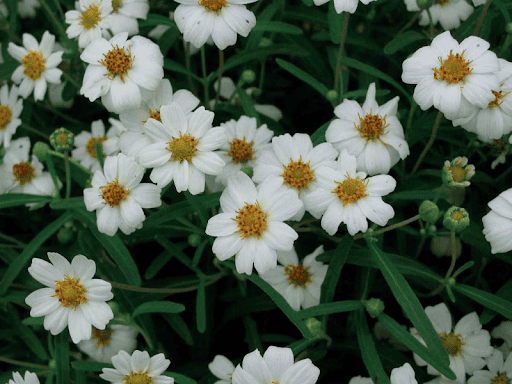
Sol Dancer Daisies (Tetraneuris syn. Hymenoxis acaulis) add playful yellow daisy flowers that “dance” in the breeze.
Blanketflower (Gaillardia aristata) rounds things out with red-and-yellow heads that bloom all summer. It actually does worse when you baby it. Rich soil and extra water shorten its life, so the less you do, the better it blooms.
Showy Milkweed (Asclepias speciosa) reaches two to four feet and serves as the monarch butterfly’s host plant in the Intermountain West. Without it, monarchs can’t complete their life cycle here.
Mojave Sage (Salvia pachyphylla) is a small evergreen sub-shrub with intensely aromatic foliage and striking smoky purple bracts and violet flowers from late Spring into Summer.
Desert Four O’Clock (Mirabilis multiflora) opens its magenta flowers in late afternoon, drawing hummingbird moths on zero supplemental water.
We carry more Utah wildflowers and perennials beyond this list. You can browse our full collection below.
Our Top Picks for Native Grasses
Blue Grama (Bouteloua gracilis) tops the list for ornamental value and low water needs. The ‘Blonde Ambition’ cultivar stays between 12 and 24 inches with those distinctive eyelash seed heads that hold their shape well into winter.
Little Bluestem (Schizachyrium scoparium) reaches two to three feet and turns copper-orange in fall, providing wildlife cover through the cold months. Indian Ricegrass (Achnatherum hymenoides), Utah’s state grass, grows 12 to 18 inches on very low water and anchors sandy or disturbed soils.
Alkali Sacaton (Sporobolus airoides) deserves a spot on this list for one reason: it thrives in the alkaline, saline soils that stump other plants. At two to three feet, it fills space gracefully. These Utah native grasses all thrive on minimal water once established.
You can find more options in our ornamental grasses library.
Native Groundcovers We Recommend
Creeping Mahonia (Mahonia repens) solves the shade problem. This evergreen groundcover reaches six to 12 inches, produces small yellow flowers in spring, and spreads steadily in spots where sun-loving natives won’t grow. It’s one of the best Utah native shade plants available.
Kinnikinnick (Arctostaphylos uva-ursi) forms a tight evergreen mat at four to eight inches with red berries that feed birds through fall and winter. Slopes are where it really earns its keep.
Pussytoes (Antennaria spp.) stay very low at two to six inches with silver foliage. It handles full sun and very low water, filling gaps between larger plants without competing for resources. For more Utah native ground cover plants, check out our groundcover page.
Water-Wise and Xeriscape Natives
Xeriscape is a landscaping approach built around reducing water use through smart plant selection, efficient irrigation, and soil management. But, it doesn’t mean zero-scape. Start by grouping plants with similar water needs together.
Put your thirstiest species closest to the house where irrigation already runs, and place low-water natives along edges, park strips, and slopes. This is called hydrozoning, and it’s the backbone of any xeriscape design.
Not every native plant is low-water, though. Aspens, Blue Spruces, Subalpine Firs, Birch, Alder, and Willows are all Utah natives, but they evolved alongside streams and snowmelt at higher elevations. Plant them in a dry valley bed without regular irrigation, and they’ll decline fast.
Always check a species’ actual water needs before assuming “native” means “drought tolerant.”
You can also mix natives with non-native waterwise species. A park strip with Desert Four O’Clock next to Russian Sage works because both thrive on minimal water, even though only one is native. Hydrozoning is what matters, not where the plant originated.
Next, prep the soil without overdoing it. The valley’s dense clay is a leftover from ancient Lake Bonneville, and most Utah natives evolved right alongside it. They actually prefer our alkaline ground.
If you have heavy clay, work compost into the planting hole, but skip manure and peat. Lay three to four inches of mulch instead of weed fabric. Fabric traps moisture and blocks the root spread natives depend on.
Then plant and wait. If you know the saying, “Year one they sleep, year two they creep, year three they leap,” it also applies here.
Try to water deeply but infrequently that first season to push roots down. After that, most species in this guide need little to no supplemental water. Our drought-tolerant plants care guide covers the details.
Choosing Utah native plants for xeriscaping takes the guesswork out of water-wise design. Additionally, park strips are the single biggest xeriscape opportunity for most homeowners. These narrow planting areas between the sidewalk and street bake in full sun, rarely get irrigation, and burn through turf grass all summer.
These plants all handle park strip conditions without irrigation once established:
- Three-Leaf Sumac
- Desert Four O’Clock
- Yarrow
- Blue Grama Grass
These are some of the best xeriscape plants Utah gardeners can start with. However, check your city’s height requirements first before planting, and give your new natives that full first year of deep watering to get started.
Native Plants Help Utah’s Pollinators
Utah is home to more than 1,000 native bee species. That’s more than the entire Eastern Seaboard supports combined.
And around 30-50% of those bees are specialists. They can only collect pollen from specific plant genera, and when those plants disappear, the bees go with them.
Colony collapse has already affected roughly 52 percent of managed bee populations in the state. That’s why we strongly advocate for gardeners along the Wasatch Front to switch to native plants, or at the very least consider mixing them in, to help curb this growing ecological problem.
The most effective pollinator gardens provide continuous bloom from early spring through late fall. Penstemon varieties, Utah Serviceberry, and Manzanita open the season. Globemallow, Buckwheat, and Blanketflower take over as temperatures climb, handing off to Showy Milkweed, Yarrow, and through the peak of summer. Rabbitbrush, Asters, and Goldenrod close out the year when everything else has quit.
You don’t need every species on this list. Even five or six native Utah plants with overlapping bloom times will support pollinators through the season. The goal is to start planting and balance natives with adaptable species. You’ll get a gorgeous garden and help restore the habitat pollinators need to survive.
If you’re researching which plants support the most wildlife in your zip code, the National Wildlife Federation’s Native Plant Finder is a solid starting point. It ranks keystone species by region and shows which plants host the most caterpillar and bee species locally. You can search by zip code and get results specific to the Wasatch Front.
One Distinction Worth Knowing
Nativars are cultivated varieties of native plants, bred for traits like flower color, compact size, or longer bloom time. Straight native species are genetically closer to wild populations. Both have a place in a Utah garden.
Nativars offer more predictable performance, while straight species carry the genetic diversity that specialist pollinators evolved alongside. Glover stocks both, and our staff can help you choose based on your goals.
For deeper reading on attracting native bees and building a backyard wildlife habitat, our blog covers the topic in detail. You can also browse our full list of native plants for pollinators for more ideas.
Why Buy Native Plants from Glover Nursery
Glover Nursery has been part of Utah’s gardening community for six generations. Our team knows which native species perform in the Salt Lake Valley, which ones struggle, and which pairings work in real yards. Here’s what that experience looks like when you’re shopping with us.
- Utah-tested native varieties: Our native plants are grown and selected for Northern Utah conditions. That means fewer surprises and stronger first-year growth.
- Staff expertise and in-person selection: Our team knows which natives handle your water source and elevation. Walk the lot with us, and we’ll match the right plants to your space.
- Delivery across Northern Utah: We deliver within 30 miles of our West Jordan location. Pricing runs $70 to $300 depending on distance, with a $200 minimum purchase. Full details are on our plant delivery page.
- Professional installation: Installation runs 75 percent of the retail plant price and includes Soil Pep amendment, proper planting depth, and Blue Stakes coordination on every job. For bigger projects, our landscape design team handles full layout, species selection, and hydrozoning from start to finish.
- Warranty on most plants: Glover’s standard warranty covers trees, shrubs, conifers, roses, and woody vines for one full year. If a covered plant fails, we replace it once as store credit and cover any price increase on the replacement.
- 10 acres of inventory: We carry two to three hundred native plant varieties across our West Jordan location, one of the broadest selections along the Wasatch Front.
Frequently Asked Questions
What are the best native plants for Utah?
The top performers across Utah yards include Penstemon varieties, Rabbitbrush, Serviceberry, Gambel Oak, Globemallow, and Blue Grama Grass.
Start with three or four species that match your sun, water, and soil conditions and build from there. The full Utah native plants list on this page breaks them down by type, size, and water needs.
Are native plants drought tolerant?
Most Utah natives need little to no supplemental water after their first full growing season. They evolved in a climate that delivers under 16 inches of rain annually, so drought tolerance is built into their genetics. Group plants by water needs using a hydrozoning approach, and water deeply but infrequently during that establishment year. For more options, browse our guide to water-wise plants that thrive in Utah conditions.
What native plants attract pollinators in Utah?
Utah supports over 1,000 native bee species, and many depend on specific plant genera to survive.
Penstemon, Showy Milkweed, Rabbitbrush, Sulfur Buckwheat, and Globemallow are among the best Utah native flowers for pollinators along the Wasatch Front. Plant these for continuous bloom from spring through fall so pollinators have food sources all season.
When should I plant native plants in Utah?
Spring planting after the last frost (typically mid-April through May) and fall planting (September through October) both work well. Fall gives roots time to establish before summer heat arrives.
Do native plants need special soil in Utah?
Most Utah natives already prefer our alkaline soil, so no need to over-amend. If you have heavy clay, work compost into the planting hole and avoid manure or peat. Skip weed fabric and use three to four inches of mulch instead. Our native plant care guide covers soil prep, watering schedules, and seasonal maintenance in detail.
What invasive plants should I avoid in Utah?
Russian Olive, Siberian Elm, and Tree-of-Heaven are the worst offenders along the Wasatch Front. All three spread aggressively, crowd out native species, and are difficult to remove once they take hold.
Choose native alternatives instead. Gambel Oak, Utah Serviceberry, and Bigtooth Maple fill their roles without the ecological damage.
Looking to browse before you visit?
Our online catalog is a good starting point, but it doesn’t show everything. Our inventory rotates throughout the season, and there’s always more on the lot than what’s listed online. If you’re looking for a specific shrub, send us a general inquiry and we’ll let you know if we have it in the store for pick-up or delivery.
Have Questions About Perennials? We Can Help
Need help choosing species for a specific spot? Want advice on soil prep or a full native landscape plan? Looking for a Utah native plant nursery near you?
Glover’s West Jordan location serves the entire Wasatch Front. We’re here for it. Stop by and walk the native plant section with us. Our staff knows these plants because we grow alongside them every season.
We deliver across the Wasatch Front and install with a one-year warranty. Six generations of growing in this climate, and we’re happy to put that experience to work on your yard.